
Sophia Liang, Master of Landscape Architecture, May 2027
What made you feel like this was the right program for your graduate studies?
The department’s diverse research tracks give me the flexibility to create a specialized path that aligns with my particular interests. Additionally, the opportunity to interact with the College of Fine and Applied Arts (FAA) ensures that my design education is enhanced by a variety of viewpoints and departmental resources rather than being isolated.
What has been a highlight of your grad school experience so far?
One of the highlights of my graduate experience has been serving as Professor Yvonne Gu’s Teaching Assistant this spring. Transitioning from her student to her assistant has given me an invaluable dual perspective on the design process. In addition to supporting my peers, this position has solidified my ambition to pursue a career in academia and serve as an educator in Landscape Architecture.
How has your thinking or perspective changed since starting your program?
My understanding of a designer’s responsibilities has developed since I started my studies here. Whether I’m doing research for a studio or helping my peers, I’ve discovered that landscape design is a dynamic discipline. Creating productive landscapes has become my goal, not just building spaces. Furthermore, I have grown unafraid to embrace the artistic dimension of design, viewing it as an essential to human experience that inspires stewardship.

what is it like to study landscape architecture at the university of illinois?
Where do you go on campus when you need to reset or get inspired?
Conversations about ideas and the chance to learn from my peers’ varied projects at Temple Hoyne Buell Hall are a constant source of inspiration for me!
What would you tell your past self before starting grad school?
Take some time to slow down and listen to yourself more.
Tell us about a project or idea you’ve become really passionate about here?
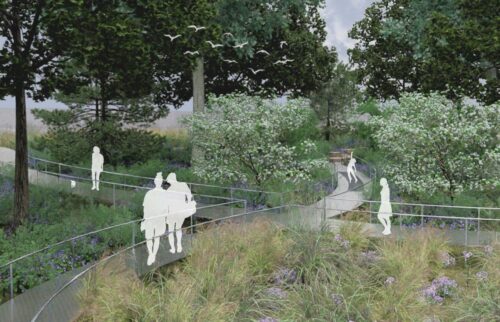
I worked on a brownfield site revitalization project in my studio last semester, which included a thorough study of sustainable remediation methods. I developed substantial knowledge in selecting plant species based on their cleaning abilities and in creating plans for biodiversity restoration. My interest in restorative landscape architecture was cemented by the process of turning a neglected area back into a vibrant wildlife corridor.